
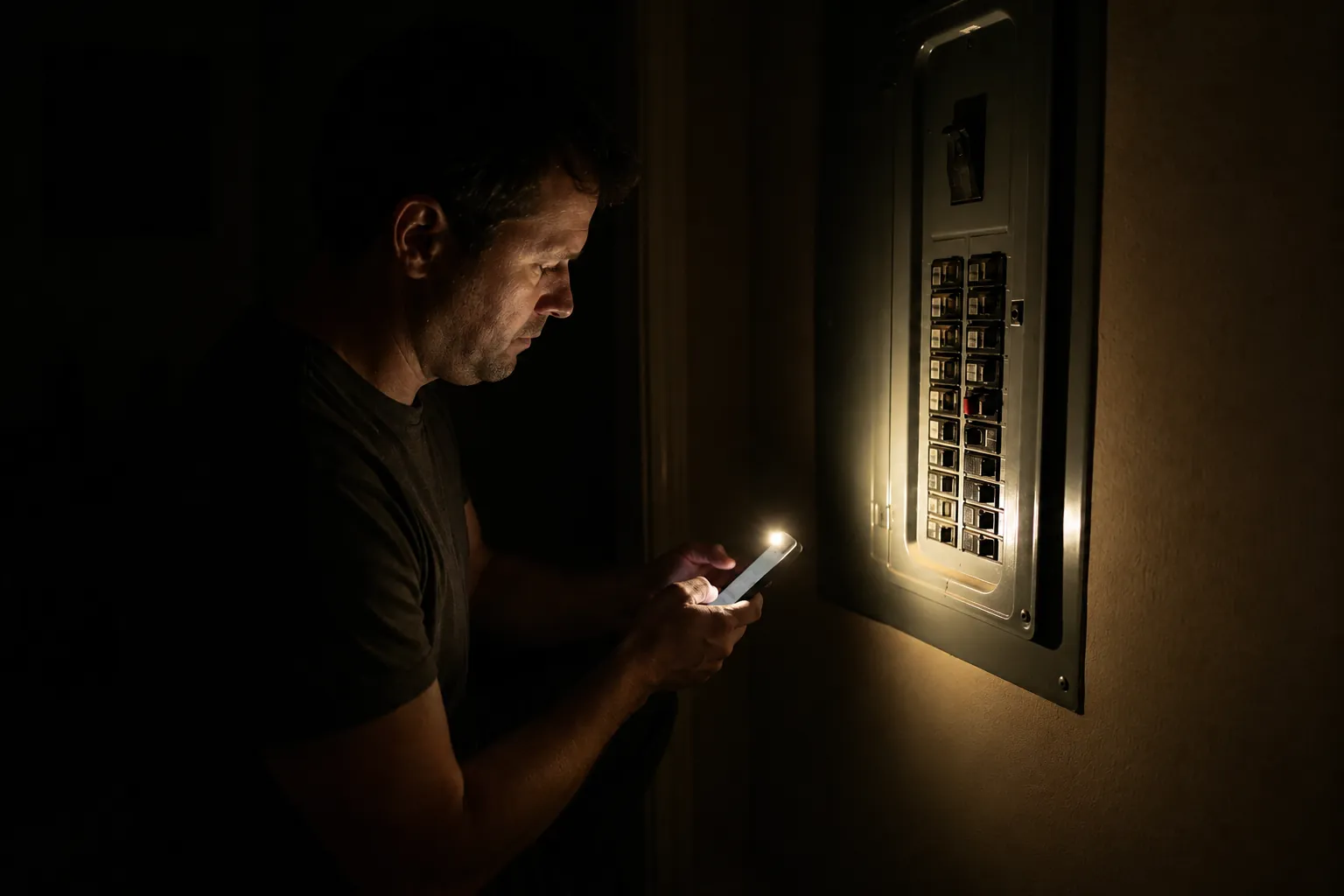
A late call may describe a loss of power, a tripping breaker, a burning smell, or planned work for another day. A message alone cannot establish which equipment is safe or diagnose the fault. Build the reply around what the caller should do next and who is responsible for reviewing the report.
Put immediate safety before job details
For fire or immediate danger, tell the caller to get to a safe place and call 911. Do not ask them to wait for an electrician's callback. The US Fire Administration advises leaving and calling 911 when it is not safe to deal with a fire.
Do not use a text exchange to ask a homeowner to open a panel, touch damaged equipment, or repeatedly reset a breaker. Keep reported facts in the caller's own words for a qualified person to review. Silence about smoke or sparks is not proof that a situation is safe.
State what your shop actually offers overnight
Write down whether a person is on call, how they receive an urgent report, and who covers them if they cannot respond. If nobody is available overnight, the reply must say that. An automated acknowledgement should not imply someone is preparing to leave.
Example acknowledgement for a shop without overnight dispatch:
If there is fire, sparks, a burning smell or immediate danger, move to a safe place and call 911. Do not wait for our reply. We received your message. This does not confirm an electrician is coming. Our office reviews routine requests from [real opening time].
A shop with an on-call person needs its own approved wording and a way to confirm that the person accepted the report. The wording must match the actual arrangement.
Collect facts a person can use
- The address and a working callback number.
- What the caller noticed and when it started.
- Whether the request concerns one fixture, part of the property, or a reported wider outage.
- Any hazard the caller has already observed from a safe place.
- Whether anyone has confirmed a callback or visit.
Do not turn those answers into an automatic safe/unsafe label. Keep uncertain reports for human review. The shop should decide its own dispatch process with qualified staff.
Close the loop on the callback
Receipt, review, and dispatch are separate steps. Record each one. If a person promises a callback, keep their name and promised time with the request. A confirmed visit needs the shop's acceptance; a free calendar slot alone is not enough.
Discuss fees through the price-question process once the immediate safety step is clear. Use the shop's approved call-out terms. This page makes no claim that overnight work always pays more or that a quick reply wins the job.
Where an answering service or SvarKlar fits
A human answering service may fit a shop that wants a person on the line. Ask how it follows your on-call rules and proves that dispatch was accepted. SvarKlar answers calls, collects details and replies on channels set up for your shop; a missed caller gets a text. Booking is set up for your shop too.
Use the AI receptionist guide to compare that role, then test a routine request and an urgent report against your actual plan. Do not use a real emergency as a test.
Talk with Frederik about the reply work you want covered. The electrical hub links the daytime, pricing, and lead-cost guides.