
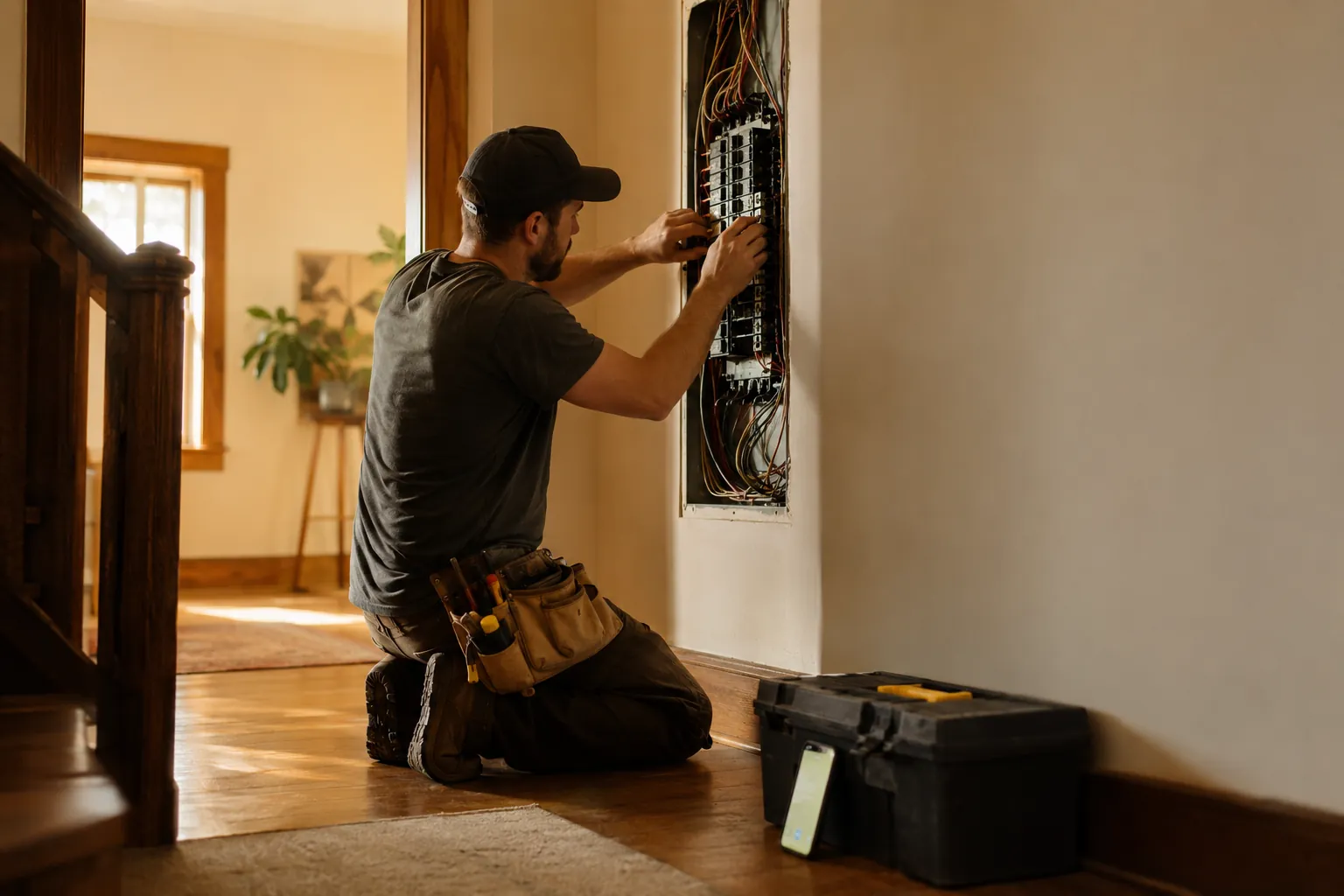
A caller asking about an outlet, a panel upgrade, or an EV charger may be trying to plan a budget. Treat the question as a request for information. Asking about price does not establish that the person is ready to buy, or that the job is a poor fit.
Separate a call-out fee, a range, and a quote
If the caller mentions sparks, smoke, a burning smell, or water near electrics, the first reply tells them to get clear and call 911, before any price or intake question.
A call-out fee pays for the agreed visit or assessment. A budget range is a guide with assumptions. A quote defines the work and price you agree to deliver. Explain which one you are giving so that the homeowner can compare it fairly.
This guide does not give a national electrical price list. Use your own approved fees and recent comparable jobs. Do not borrow a figure for an outlet replacement and apply it to a new circuit or a panel upgrade.
Ask the few questions that decide the next step
- What work is being requested: a fault, replacement, new circuit, charger, or panel work?
- What is the address and type of property?
- Is the caller the person who can approve the work or arrange access?
- What can they describe without touching equipment or opening a cover?
- Are they seeking an estimate or reporting an immediate hazard?
For a charger request, ask for the model and proposed location if known. For a panel request, record what the homeowner already knows. Missing technical detail is a reason for the electrician to review the job, not a reason to send a homeowner inside a panel.
A range reply the office can adapt
Example using the shop's own figures:
For [defined work] under [assumptions], our budget range is [approved low] to [approved high]. That covers [included work]. It excludes [known exclusions]. We need [the missing detail or a visit] before we can confirm your quote. Our assessment fee is [approved fee and terms]. Would you like us to arrange the next step?
If you do not have a sound range, say what must be checked first and what the assessment costs. A routine task with known scope may fit your pricing rules; a fault diagnosis may need a visit. Avoid promising that every job can be priced remotely or that none can.
Handle hazard reports separately
If the caller reports smoke, fire, or immediate danger, do not keep them on a pricing script. Give the emergency instructions in the after-hours electrical guide and let a person review the report. An automated reply cannot decide that equipment is safe.
Keep the promise after the call
Record the exact range, assumptions, exclusions, and next step supplied. If the electrician changes the proposed scope, explain the change before confirming the price. The useful measure is whether the caller got a clear, accurate next step, not how quickly a figure was sent.
Frederik can configure the questions and approved wording in SvarKlar's agreed scope. The electrician owns pricing rules and the final quote. See what an AI receptionist handles and the callback process.
Bring your current call-out and quote rules to a call with Frederik. Return to the electrical guides for the other parts of intake.