
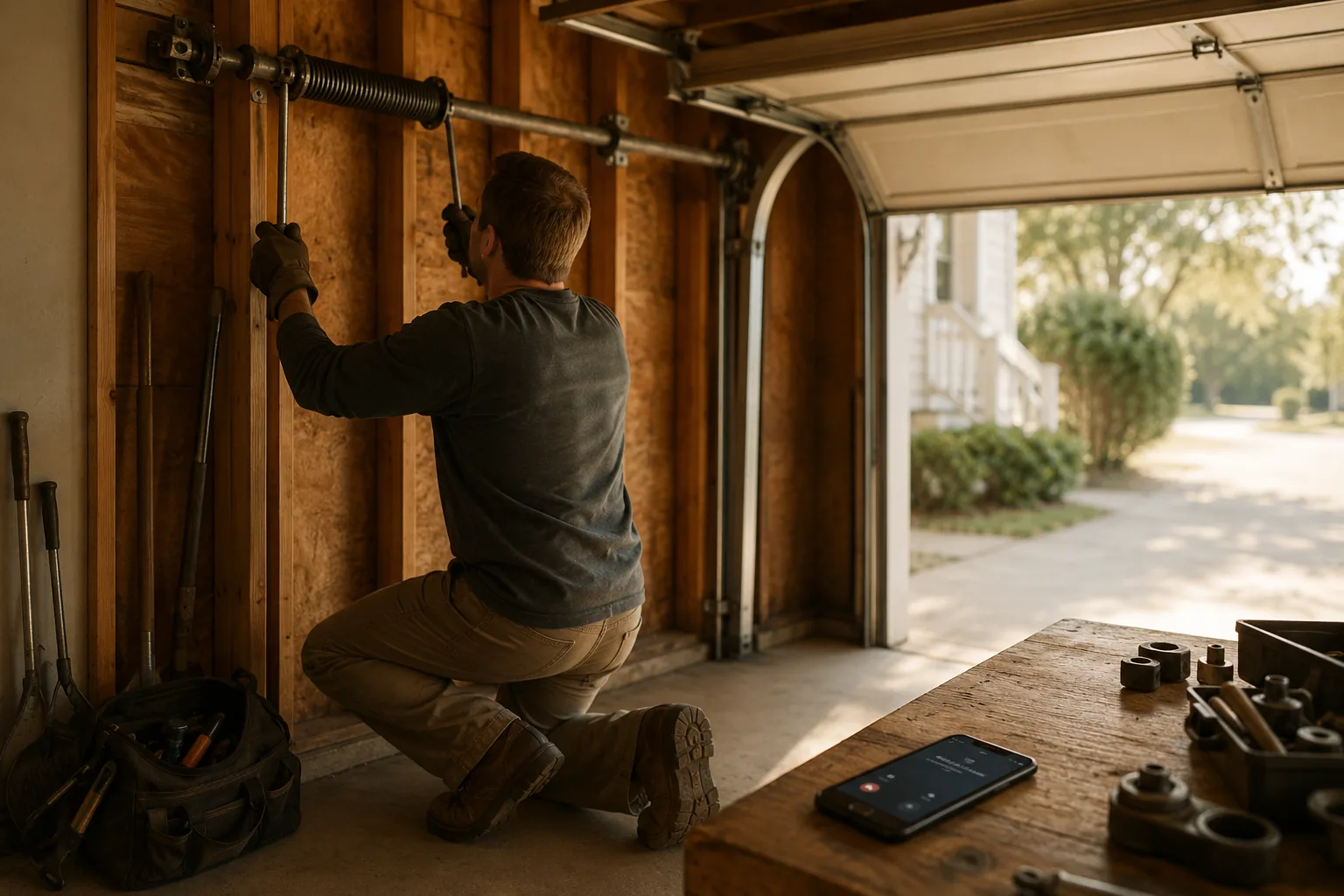
You are halfway through winding a torsion spring. Both hands grip the bars. The spring is wound tight and sitting above your head with a load you can feel in your shoulders. You do not move. You do not blink.
Then the phone rings on the bench.
You cannot let go. Not for a second. So it rings out and rolls to voicemail. By the time you set the cones, check the balance, and wipe your hands, that caller is long gone. They booked the next name on the list.
The one call you physically cannot take
Most missed-call stories are just about being busy. This one is not. Winding a spring is the rare job where stopping is dangerous.
The spring holds a huge amount of stored force. You feel every quarter turn through the bars. There is no free hand and no safe place to pause. The phone may as well be on the moon.
The work that pays the bills is the exact thing keeping you off the phone.
Why a loaded spring is not a job to rush
Houston owner Cody Johnson, of Garage Door Doctor, does not soften it. A garage door spring, he says on the shop podcast, is "one of the most dangerous things in your house and you don't even know it". Homeowners see a door. You see the stored force behind it.
That is why you never cut a wind short to catch a call. A rushed wind is how hands get hurt. The call can be answered by something else. The spring cannot.
What the caller on the other end just lived through
The homeowner who phones you about a broken spring usually heard it go. Cody describes the sound: "if you hear a big puff and it shakes your whole house it's probably the spring that broke". Then comes the part that scares people. The same episode says "it can happen very quickly sometimes you don't even know what happened".
So that caller is shaken, standing near a door with a spring that just let go, and maybe kids and a car close by. A recorded greeting asking for a message does nothing for them. We look at what a beep does to that caller in the garage door voicemail problem, and what the lost job costs in the cost of missed calls.
The first text is about safety, not booking
This is where a reply earns its keep. The line that goes out first, once you set your emergency rules, covers four things: do not touch the spring or the cables, do not try to open the door, keep kids and cars clear, and call 911 if anyone is hurt.
Only after that does it ask questions. Is it the spring, the track, or a car trapped inside? How fast do they need you? It writes in your shop's voice, the way you would tap it out yourself. Routine work lands on your calendar. If the job is urgent or unclear, your cell gets it right away, with the full story attached.
It runs the same way at night. We cover that window in handling garage door calls after hours. New to the idea of something answering for you? Start with what an AI receptionist is.
What it asks before you ever see the lead
A good reply is not just fast. It is useful. By the time you wipe your hands, SvarKlar has already pulled the basics off the customer: what broke, where they are, and how urgent it feels.
So you are not starting cold. You skip the back and forth on a callback. The lead reaches you with the job already sketched out. A broken spring gets booked as urgent. A caller after a tune-up gets your inspection slotted in for the day they want.
It can also handle the price question without putting you on the spot. A customer asking "how much for a spring?" gets a clear, honest answer in your range, or a steady "the tech confirms it on site," never a wild guess that boxes you in. That whole tightrope gets its own guide: giving a garage door quote over the phone.
The quiet call that fills the week
Not every caller is in danger. Cody's shop sells "the lube and tune with new rollers for only $170" (read on the shop's other podcast episode in June 2026). Use your own number, not his.
That caller is calm and wants a day on the calendar. They book too, if someone answers, and so does the one whose door drags when the cold or heat sets in. The tune-up is the easy call. The spring is the one that cannot wait, and the same reply handles both. Want the full picture of how it works? Read how SvarKlar works.
Will a text tell a frightened homeowner the wrong thing?
It is a fair worry when a spring is involved. A wrong word could put someone near a door they should leave alone.
The safety line is yours. You write it in your emergency rules, so it says what you would say: stay clear, and call 911 if anyone is hurt. When a message is confusing or urgent, it goes to your cell with everything SvarKlar learned attached, so the hard calls stay your call.
Set up for you, not bought off a shelf
Frederik builds SvarKlar for your shop and runs it himself. The spring questions, your booking habits and the jobs you want sent to your cell at once all come from how you work. No call center, no generic script.
One person tunes it to your voice and stays on the hook for it.
Let the text go first and the spring keep your hands
You cannot be two places at once, and with a spring wound you should not try. The job is to make sure a shaken caller hears the safe thing first, from you, in your words, while you finish the door.
The full set of garage door guides lives on the garage door resource hub.
Picture the next wind. Bars in both hands, spring loaded, phone buzzing on the bench. A homeowner is standing in a garage that just shook. Your shop's safety text reaches them first, and you finish the door without a thought for the phone.
Wondering what your emergency rules should say for a spring call? Book a call and we will talk it through. The homepage shows the rest of what we handle.
More guides like this are collected in SvarKlar Resources.