
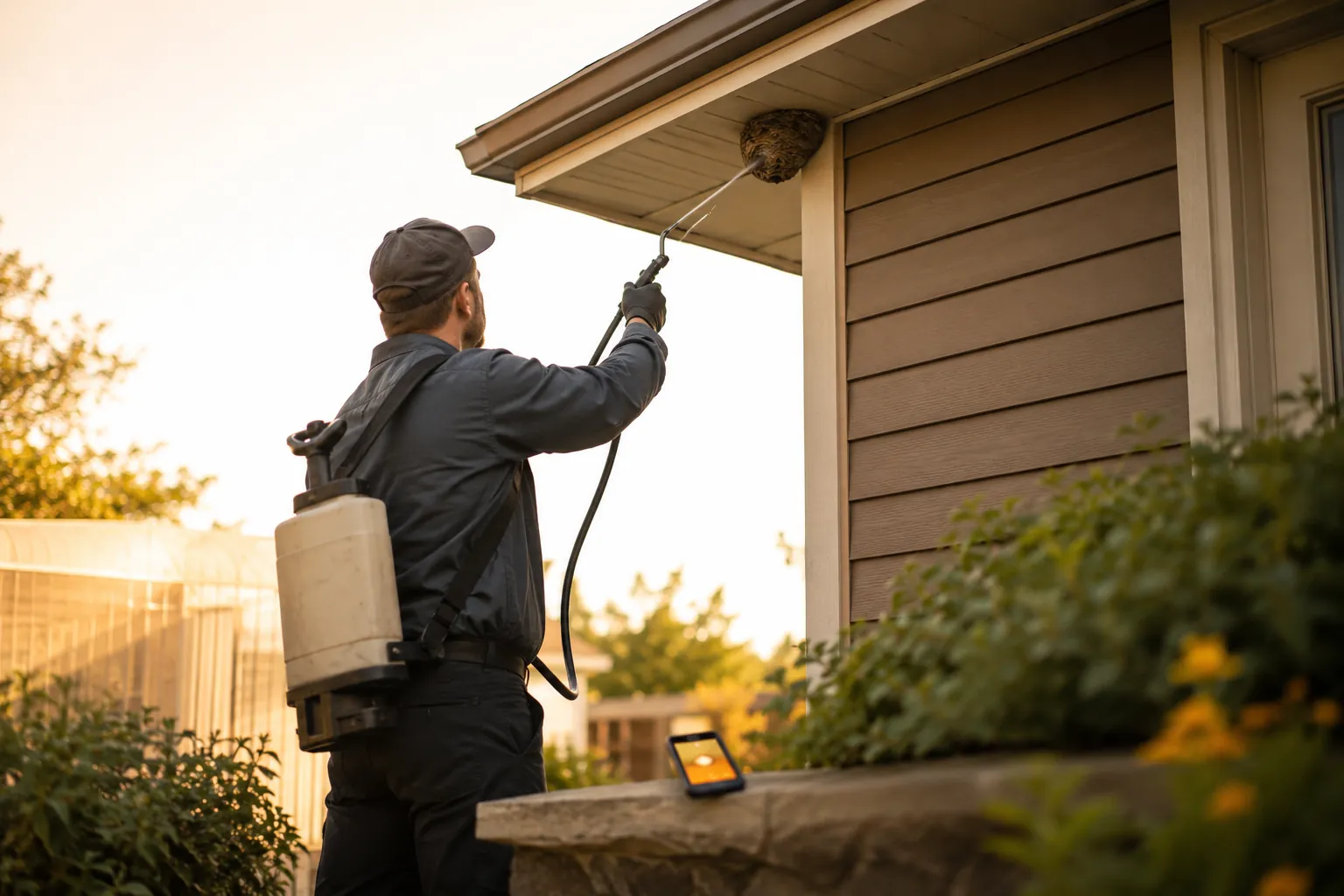
For example, you are on a ladder treating a wasp nest when your phone buzzes. You cannot stop work to check it. When you finish, review the missed calls and decide which needs a callback first.
When several requests arrive during field work, it is easy to lose track of names, addresses, and promised callbacks. A written queue gives you one place to return to when the job in front of you is done.
Use your records to plan a busy stretch
Which pests drive your busy period depends on your area and the work you offer. Look at last year's call log by week and by pest type. Use it to plan coverage, callback time, and the questions you want asked first.
A vendor's estimate is not a forecast for every local shop. Your own inquiry totals give a better starting point for planning staff time and a callback routine.
Josh Davis, co-founder of Neighbors Pest Solutions, described how his team divided field and office work: “I spent five months as a service technician working from sunup to sundown while Derek took office calls until 10 p.m.” That is one company's arrangement. Use your own records to plan coverage.
Seasonal planning can also mean checking whether you have enough time for repeat-service visits, new estimates, and callbacks. Keep those tasks visible when you plan the week.
Keep missed calls in a callback queue
A customer may describe an urgent problem, but you still need enough detail to decide what to do. Ask what they saw, where it is, whether anyone is at risk, and how they can be reached.
Do not assume a caller will leave a message. A clear greeting can say what details to leave and when someone will review the message.
Compare missed calls by week and time of day. Our reply-time guide offers a practical way to set a goal without treating one time as a rule for every shop.
Estimate the cost from your records
A one-time treatment and a recurring plan are different jobs. Record which type each inquiry asks about and whether it becomes completed work. Use actual repeat visits when you review customer value.
A missed inquiry does not tell you whether the caller would have booked or returned. Use your own completed-job and repeat-visit records to estimate what a missed call may cost. The missed-call guide shows how to work with your own figures.
Count missed calls and follow-ups each week, then note which customers book, cancel, or need another contact. That keeps seasonal planning tied to your shop's records.
Compare coverage options
If you are considering added phone coverage, compare the cost with the number of requests and callback hours you recorded. Decide which hours and tasks need coverage, and what you can handle with a callback queue.
Before the busy weeks, write the greeting, intake questions, callback times, and handoff steps you can keep. Review the list when your service area or hours change.
What SvarKlar can do for this workflow
If a caller says someone was stung and has trouble breathing, or a child or pet swallowed bait or spray, once you set your emergency rules, the first reply tells them to call 911 (or Poison Control at 1-800-222-1222 for a swallowed poison) before any intake question.
SvarKlar answers calls with AI, and a caller it misses gets a text back. It can ask what pest the customer saw, the address, access details, and timing. The order names the tasks and channels. Quotes and bookings are added when you ask for them.
Booking is included only when the order names the task and its rules. Keep requests that need your judgment in a callback queue.
Frederik builds and runs each setup around the work named in its written order. Read how SvarKlar works or the AI receptionist guide for the service overview.
The other summer pressures, handled
For intake and callback examples, see the pest-control resource hub. Some callers ask about price before deciding on a visit; see the phone-price guide. If you handle after-hours requests, use the after-hours guide to plan what callers should do and when you can respond.
If you use a lead service, compare its terms and charges with completed treatments from your own records. The lead-plan guide has a simple comparison method.
Review the plan after the busy period
Compare inquiry totals, response times, completed treatments, and open callbacks with the same period last year if you have those records. Use what you can verify to decide whether to change staffing, hours, or intake questions.
A short intake list and a planned callback window can help keep requests visible when field work gets busy. Review the log each day and move urgent or unclear questions to your own queue.
Want to plan intake and callbacks for your busy weeks? Book a call or see how the service works.
More guides like this are collected in SvarKlar Resources.