
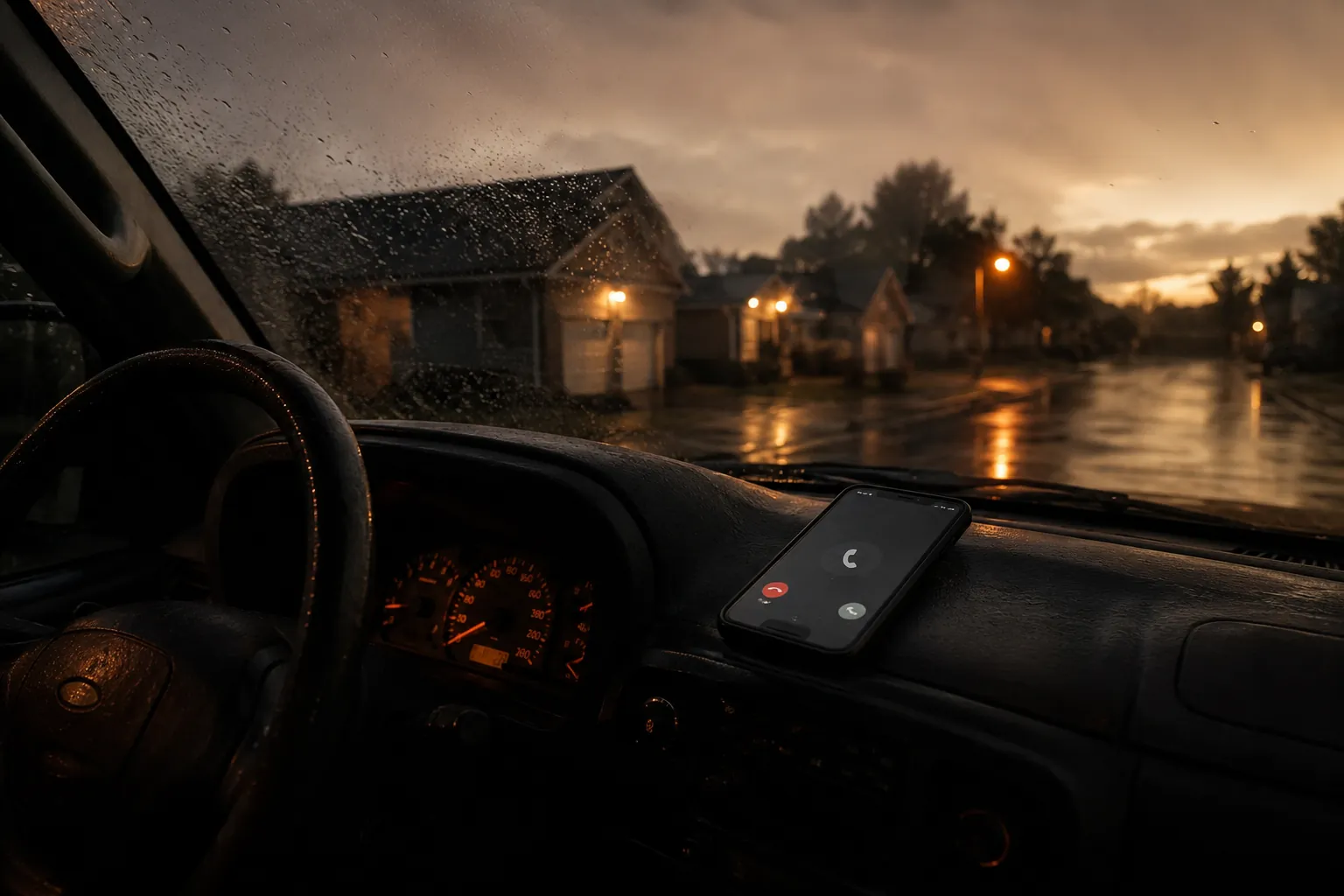
It is going on ten at night, the wind has been pushing rain sideways for an hour, and a homeowner is standing in the hallway with a mixing bowl under a drip that was not there at supper. She wants one answer, whether anybody is coming tonight. Your first reply is all she has to go on, so it should say who reads her report and whether you cover nights at all.
Some callers will try another roofer when the line goes unanswered. One r/Roofing commenter wrote: "There's a small truth that if someone can't reach a company, they just call the next. That said having an AI answer seems equally likely to alternate [sic] them." Your first reply needs to say what happens next without promising a night crew.
The calls do not stop when the office closes
A roofing business runs on a schedule. A storm may hit outside it. Set one rule for a reported active leak, another for a later hail inspection, and one person who can confirm whether the crew is available. That gives an overnight caller a useful response without guessing the damage.
Another r/Roofing commenter wrote: "I pay very little money for a real American person to answer all of my calls and email me a transcript as well as push through to my cell if it's urgent." Whatever you use at night has to get the urgent ones to a phone that someone will pick up, so decide who in your crew receives that alert before you add any coverage.
What SvarKlar does instead of a night shift
SvarKlar is not a generic after-hours answering service. It answers your calls with AI at any hour, 2 AM included, and replies to texts, web forms and messages the moment they land. A caller it misses gets a text back in seconds instead of a phone that rings to nothing.
The owner picks the wording of every text, and the AI says it is an AI if asked.
Safety comes before any question about the roof. The caller should stay off the roof. If water is coming through a light fixture, near outlets or through a sagging ceiling, they should leave that room and turn the power off only if it is safe to do so. For a downed power line or a tree through the house, the first call is 911 or the utility, not the shop. The text from the shop comes after that.
It asks what the caller can report safely: where water is entering, what damage they can see and a callback number. The agreed alert rule flags reported urgency to a person. A roofer decides how soon to review each roof and whether the crew can attend. A report of no active leak does not prove the roof can safely wait.
Tarp tonight or wait for daylight
Whether to put an emergency tarp up in the dark or wait for daylight is the roofer's call, because a wet roof at night in wind is a hard place to work. While that gets decided, the homeowner can do a few things inside: move furniture and electronics out from under the drip, set a bucket, and lay towels along the floor. A few photos of the wet ceiling and floor, taken before anything is cleaned up, help with the insurance claim, though the policy and the adjuster decide what counts.
What the night alert should carry
A night alert should carry the reported address, callback number and description of active water. Mark missing details for the person on call; do not delay an urgent alert while trying to complete every field. That person decides whether to phone back or send a crew.
By morning, a list instead of a blur of missed calls
A morning handoff can show who replied, what damage they reported, and which reports still need your call. An active leak should follow your agreed overnight alert rule rather than wait for sunrise. See how to sort storm reports when the queue grows, and how SvarKlar works for the setup.
Agree who reviews overnight reports before adding after-hours replies. SvarKlar can gather the first details; your roofer decides the response. By morning, the handoff should show which callers still need a reply and any visit a person has confirmed.
Want to see how it would handle your crew’s after-hours calls? Book a call or see how the service works.
More guides like this are collected in the roofing resource hub.