
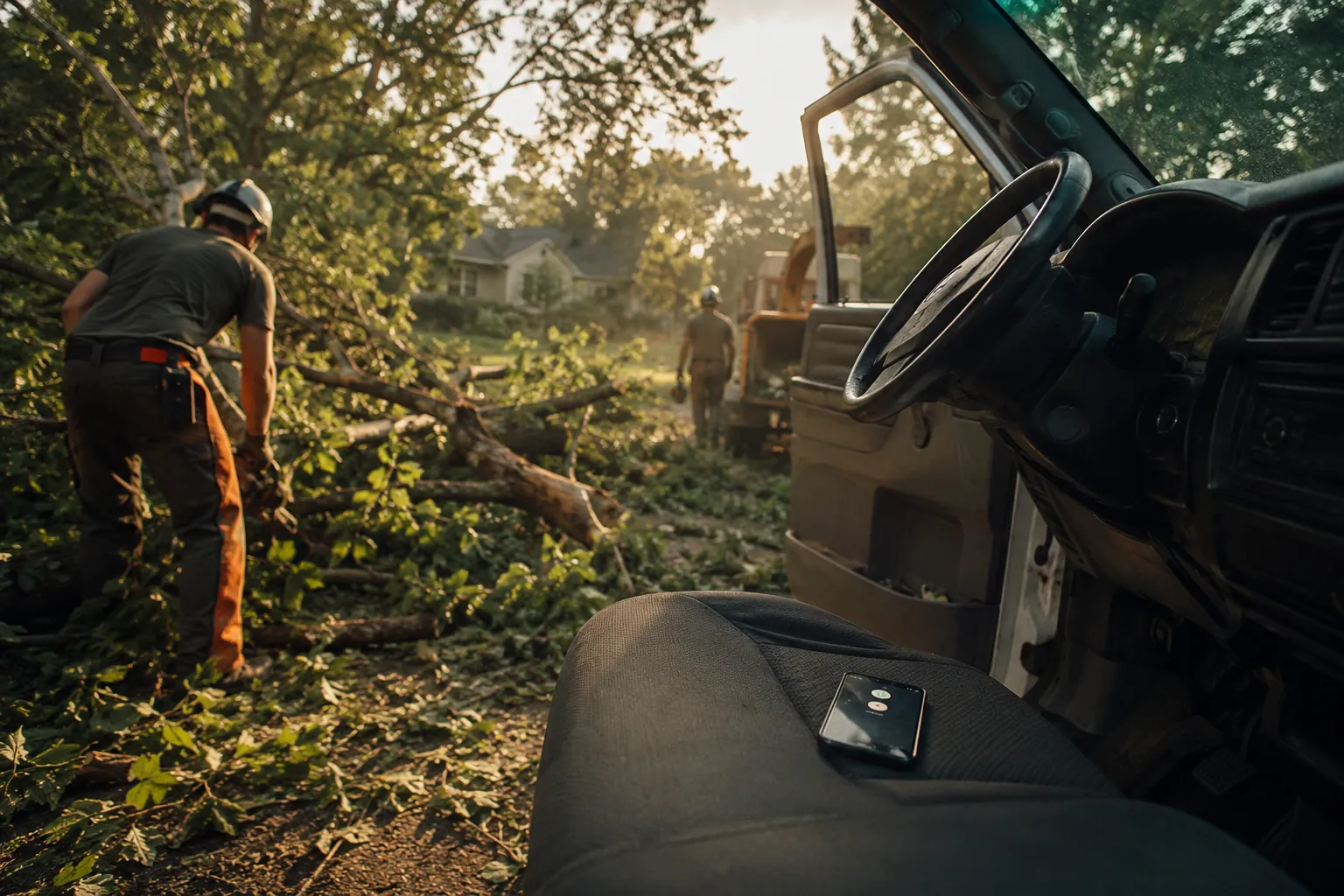
Freddie Couch of Veteran Tree Services in Maryland described his own storm response: “I didn't receive 14 calls,” Couch said. “I responded to all of them.” That is his account of one surge, not a standard call count for every storm.
Every call still needs a real safety check
Couch also described his on-site check: “The first thing when we step on scene, I assess the situation,” he said. “Make sure there's anything dangerous around like wires, check the house, everything.” After telling anyone near a downed line to stay clear and call 911 or the utility, a first message can ask about wires, injury, and what the tree is resting on. It cannot replace that on-site check.
The calls you miss do not come back
When requests overlap, record each address and hazard report before choosing a route. Tell callers when you cannot take the job and direct them to seek another crew. A fast reply helps a homeowner plan, but it does not create truck time.
Answering the surge does not need a bigger crew
SvarKlar answers calls, texts back missed callers and replies to written leads. It gathers a list of requests for a person to review. The owner or dispatcher decides safety, route, and capacity before promising any visit.
If anyone is hurt or a line is down, tell the caller to stay clear and call 911 or the utility first. Then ask what came down and what it is resting on. Flag the message to the owner, but do not imply a crew has been dispatched. For the day-to-day setup, see how SvarKlar works and the cost of missed calls.
Is this you?
A storm can put more calls on your phone in one afternoon than your crew answers in a normal week. You have lost a job to whoever picked up first, more than once. You cannot justify carrying extra office staff for three or four rushes a year. You still want a real person making the call on anything that sounds like an actual hazard.
Use your last storm log to plan the handoff: who checks hazard flags, who calls homeowners back, and when to say the crew is full. The same owner-capacity question also appears on normal busy days; see the one-crew guide.
When storm requests pile up, the useful first reply asks for the address and hazard, then states what happens next. A person checks the list and confirms which visits can be made safely.
Want to see how it would handle your outfit’s inbound? Book a call or see how the service works.
More guides like this are collected in the tree service resource hub.