
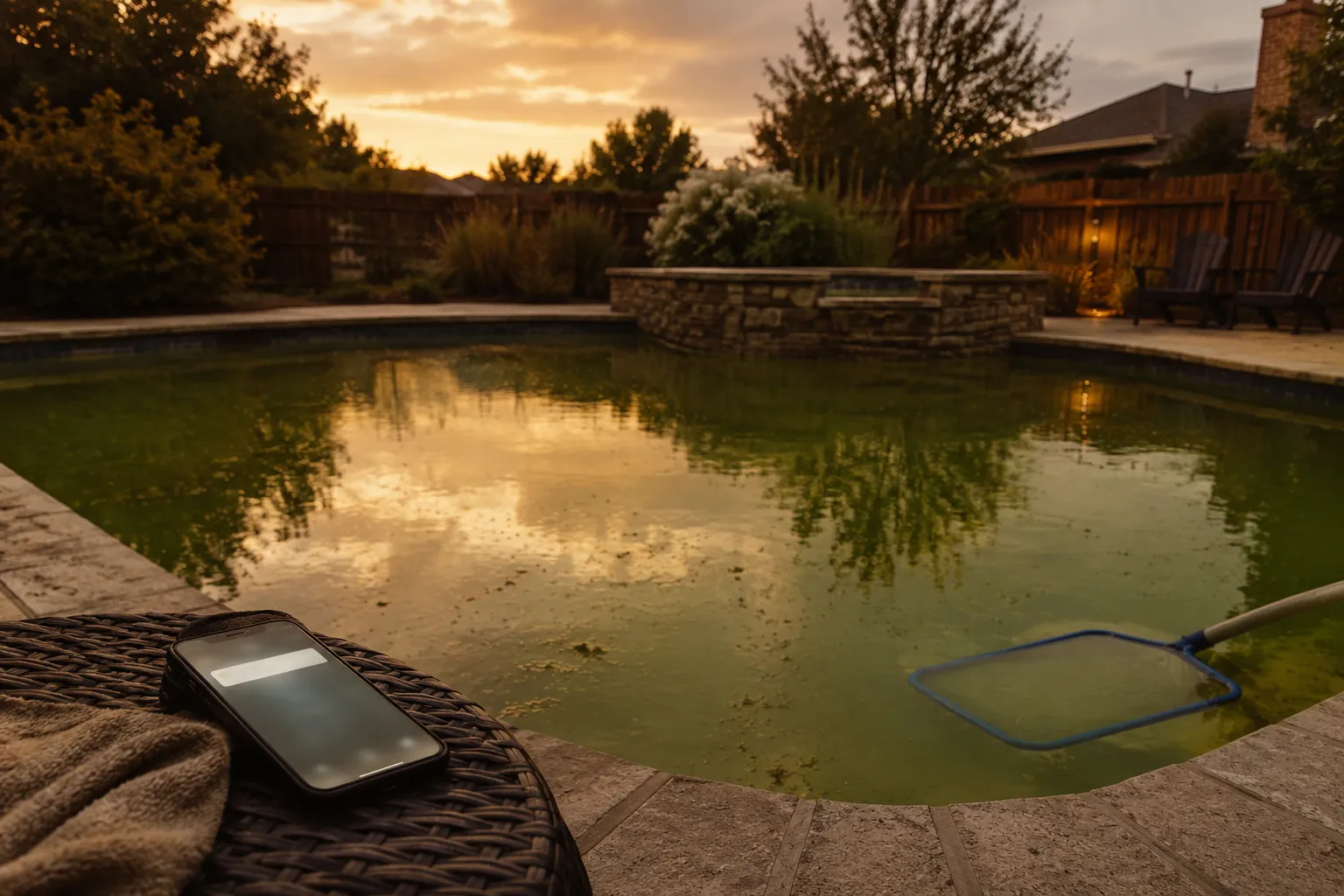
It is July 3rd. A family across town walks out back to check on the pool before tomorrow. The water has gone the wrong color, not blue, not even cloudy, but green. The party is tomorrow and a crowd is coming.
They do not wait until next week. They grab the phone and start calling pool guys.
Yours is one of the numbers they try. But you are halfway through a route, arms in someone else's skimmer basket, phone buzzing in the truck three feet out of reach. The call rings out. You will see it tonight, maybe.
The event date matters, but it does not tell you what work is needed or whether the route has room. Gather the details first, then give the customer a clear next step.
Start with the facts you need
Use the same short checklist for each request so you can review it later.
- Customer name, phone number, and service address
- Pool size or type, visible condition, and when it changed
- Whether the pump is running and any equipment issue the customer noticed
- Photos, if the customer can safely provide them
- Event date, access details, and the best time for a callback
Keep the customer's report separate from your own assessment. A photo or message can help you understand the request, but it may not be enough to quote the work or promise that the pool will be ready by the event.
You are on a route, not at a desk
The reason the call rings out is not laziness. It is the shape of the work.
When you are on a route stop, you may not be able to pause safely to review a new request. Put it in a queue for later and mark the event date and callback time.
What happens to the message you do not catch
If the request comes by voicemail, move it into the same checklist as texts and web forms.
Do not rely on memory for details. Copy the caller's words, requested timing, and promised callback into the queue. If you cannot meet the requested date, say so before the customer plans around it.
A callback queue helps you see what still needs an answer. For messages, record the caller, pool issue, address, deadline, and next action. See the voicemail callback guide.
Give a clear next step
A first reply can acknowledge the request and ask for details. It should not suggest that a visit is booked or that the pool will be ready until you have checked both.
If anyone is hurt, in trouble in the water, feels a shock, or is breathing fumes from spilled or mixed pool chemicals, or a drain cover is broken, once you set your emergency rules, the first reply says this before any question: get everyone out of the pool and away from the chemicals or equipment, and call 911.
For example: “Thanks for the details. Please send a photo of the pool and tell us when the event is. We will check the route and call you by 3 PM with the next step.” Use a callback time you can keep.
If your shop uses automatic replies, make sure they ask only for details you need and give a true callback window. See how to set a reply goal.
Review the request before offering a visit
A green-pool message does not tell you the treatment plan, time needed, or available slot. Check the route and ask for any missing details before you offer a visit.
If the customer has a specific event date, confirm whether you can inspect or treat the pool before then. If you cannot confirm, offer a callback after you check your schedule rather than promising a result.
For ongoing customer updates, see the route communication guide.
You cannot just hire someone to sit by the phone
The obvious fix is to put a person on the phone. For a solo route, that math falls apart fast.
If you compare outside answering help with another option, list the price, hours, channels, and tasks each one covers. Use current quotes and your own call records rather than assuming one service costs more.
For lead-source costs, see the pool lead-cost worksheet.
What actually catches the panic call
For a green-pool request, collect the condition, equipment status, address, access details, and event date. Then give a next step you can keep, such as when you will review the details or call back.
SvarKlar answers calls with AI, and a caller it misses gets a text back. Quotes and bookings are added when you ask for them.
- Collects the agreed details. Pool condition, equipment status, address, access notes, and the event date.
- Uses the agreed channels. The written order names text, web, message, or missed-call text-back tasks.
- Sets a truthful next step. The reply can request photos or say when you will review the route.
- Leaves visit and outcome promises to you. A booking or quote is included only when the written order names that task.
Use this checklist whether the request arrives by call, text, or form. For the route-side callback steps, see pool-service inquiry intake while on route.
What you should not promise the day before a party
A fast reply is not a license to lie. The worst thing an automated answer can do is swear you will be there tomorrow morning when your route is already full.
Before setup, agree what the reply may ask and what it may confirm. A green pool may need a visit or more information before you can estimate the work. The message should make that limit clear.
A clear reply should say what you know and what still needs review. Collect the condition, equipment, access, and event date before you offer a visit or a firm arrival time.
Built by one person, for a one-person route
Frederik builds and runs the work named in the written order. That order should list the tasks and channels. See how SvarKlar works for the setup overview.
That is the underdog version of an answering service. One person who sets it up and stays on the hook for it, not a faceless platform that signs you up and goes quiet. You can see the wider picture in how an AI receptionist works, or the moving parts in how SvarKlar works.
Gather the event date, pool condition, equipment status, photos, and access details. Then check your schedule and give a callback time you can keep.
A prompt reply can collect the facts. Your review confirms whether a visit fits and what you can promise.
Want to see how SvarKlar would handle your panic calls? Book a call or see how the service works.
More guides like this are collected in pool service resources.