
A driver is standing beside a car with a crushed fender, phone in one hand and a claim number in the other. They are not shopping for the cheapest bumper. They are trying to get through the next week without the car. The first shop that makes that look easy gets the job.
If someone is hurt, safety comes before the estimate
Some callers are not at home yet. They are on the shoulder, shaken, with a car that may leak fuel. A fresh crash comes first once you set your emergency rules: the first text tells them to get away from traffic to a safe place, to call 911 if anyone is hurt or fuel is leaking, and to stay clear of the car. No question about the repair goes out before that.
“How will you work with my insurance?”
This is the question that comes first for most callers. It sits on Key Collision Center's list of questions to ask a shop: “How will you work with my insurance?” The driver is asking if you will make a hard week simpler.
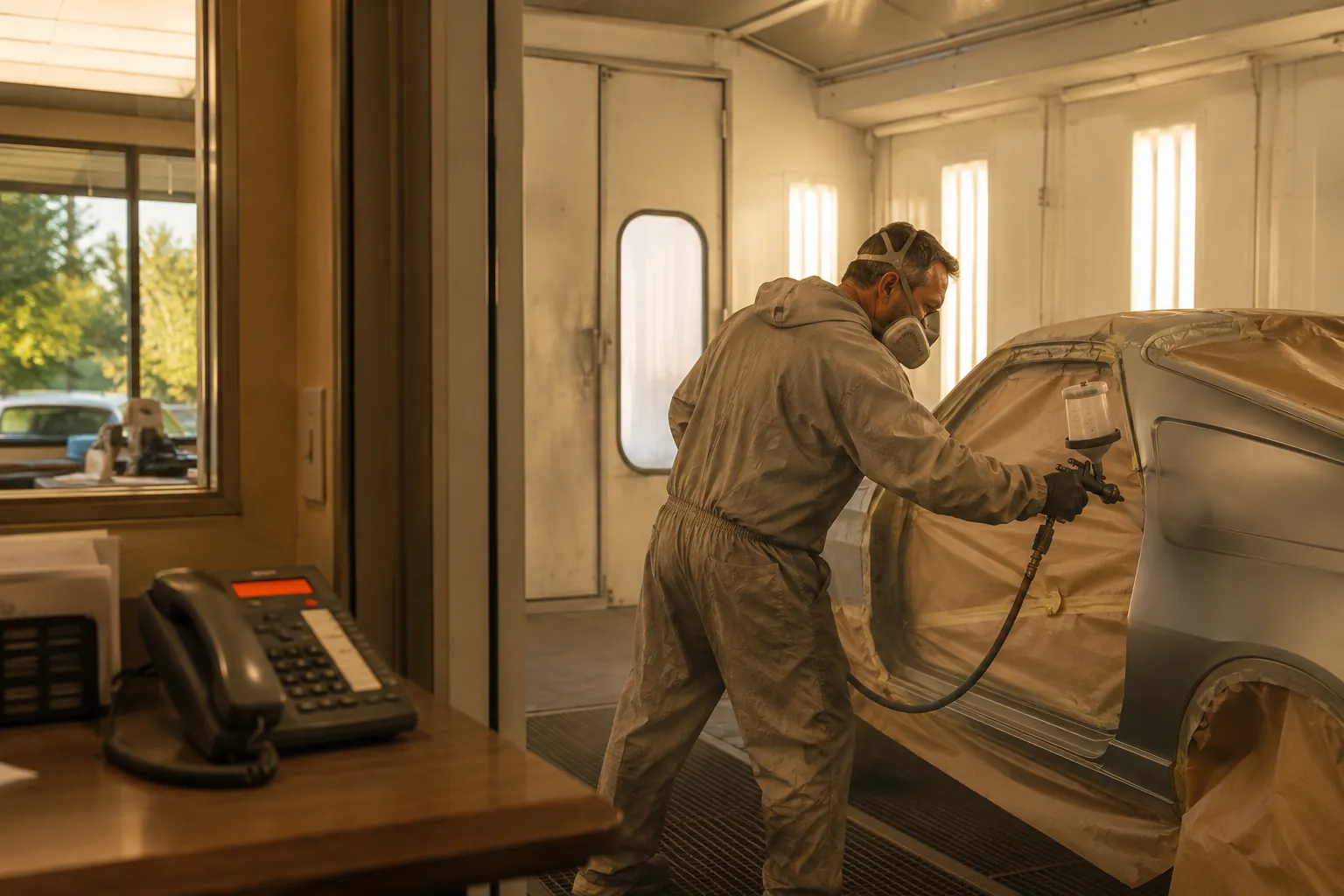
You can answer it in two sentences. The trouble is that you answer it with a respirator on, or not at all. SvarKlar's first text asks whether insurance is in play or the driver is paying cash, and passes what it learns to you with the rest of the story.
Rental cars and picking the shop
The next two come close behind. The same Key Collision list has this one: “Do you offer rental cars or loaner vehicles?” Insurer claim pages carry another that drivers type into search: “Can I choose my own shop?”
The second one matters most to a shop that is not on an insurer's program. A driver who is told nothing may assume they have no choice. A driver who hears from you in minutes learns that they do. Say what is true for your shop, in your words, and confirm yourself anything that depends on the claim.
The estimate nobody follows up on
Most of the lost jobs come after the estimate. The driver says they will think it over, and nothing is sent. Jim Lovejoy has 25 years working across hundreds of collision shops. In the notes for his episode of The BodyShop Leaders Podcast, the show says “‘Let us know if we can help you.’ That's what Jim Lovejoy hears estimators say in shop after shop. And it's not a closing attempt.”
The same notes say he explains “...why follow-up alone can move your closing ratio by 10 points or more...” Those are the show's words about his talk, not a measure of your shop. But the point is clear. A plain second message is worth more than another hour of waiting to be asked.
For a shop with one booth, the second message is the first thing to slip. No callback, no job follows that slip from the driver's side.
What the first reply does while you paint
When you miss a call, SvarKlar texts the caller back in seconds, then asks the shop's questions: what was hit, the make and model, insurance or cash, and photos if they have them. A fresh wreck or a frame hit is flagged to you with the full story, so the urgent ones reach you first.
It does not claim to be a person, and it does not guess at a price on a car it has not seen. How to handle that part is in handling price questions before the driver calls the next shop. What a single missed car is worth is in what a collision lead is worth, and the pull of buying more leads is in paid leads versus owning your inbound. For the bigger picture, see what an AI receptionist does for a service business and how SvarKlar works.
Frederik builds SvarKlar and runs it himself, so the answers it gives are the ones you wrote.
Is this you? You step out of the booth with two missed calls. One driver wanted to know about insurance, the other about a loaner. You ring both back, and the first has already booked the shop that texted.
Want those answers sent while you finish the panel? Book a call or see how the service works.
More guides like this are collected in collision repair and auto body resources.